
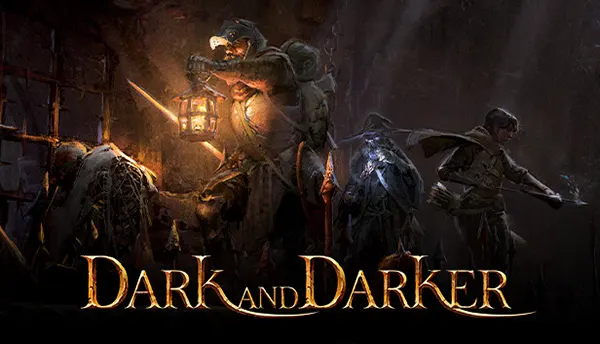
Dark and Darker Mobile — Can Hardcore Extraction Gameplay Work on Touch Controls?
Dark and Darker has built its reputation on tense dungeon runs, slow-paced combat, and high-risk extraction mechanics. Translating this formula to mobile devices raises a practical question: can such a demanding gameplay loop function comfortably on touchscreens? In 2026, mobile hardware is no longer a limitation, but control precision and interface design remain critical factors that determine whether this experience feels natural or frustrating.
Core Mechanics of Dark and Darker and Their Mobile Adaptation
The original gameplay relies heavily on deliberate movement, stamina management, and timing. Unlike fast arcade titles, every action in Dark and Darker carries weight, which makes input precision essential. On PC, players depend on mouse accuracy and keyboard shortcuts, but mobile devices require rethinking how these interactions are executed.
Developers approaching a mobile version must simplify without removing depth. This often means introducing contextual actions, adaptive buttons, and gesture-based mechanics. For example, interaction systems can automatically prioritise nearby objects, reducing the need for pixel-perfect taps while maintaining immersion.
Another critical aspect is combat readability. Slower combat may seem suitable for touch input, but the need to block, parry, and aim still demands responsiveness. Modern mobile engines in 2026 allow high frame rates and reduced latency, yet the design challenge lies in translating complex mechanics into intuitive screen interactions.
Interface Design and Input Responsiveness
Effective interface design is the foundation of any successful mobile adaptation. Instead of replicating PC layouts, developers typically redesign HUD elements to reduce clutter and prioritise visibility. In extraction-based gameplay, situational awareness often determines survival, so screen space must be used carefully.
Touch responsiveness has improved significantly with modern displays supporting high refresh rates and low input delay. However, finger-based input lacks the precision of a mouse, which forces designers to incorporate aim assistance or lock-on systems. These adjustments must remain subtle to avoid altering the core difficulty.
Customisation is equally important. Players expect adjustable control layouts, sensitivity settings, and optional external controller support. In 2026, many competitive mobile titles offer full control remapping, and a Dark and Darker mobile version would need to follow the same standard to remain accessible without compromising its identity.
Challenges of Extraction Gameplay on Mobile Devices
Extraction mechanics introduce psychological pressure: players risk losing everything if they fail to escape. This tension is central to the experience, but it also amplifies frustration when control limitations interfere with performance. On mobile, this risk-reward loop must be carefully balanced to prevent players from feeling unfairly punished.
Session length is another factor. Traditional runs in Dark and Darker can be lengthy, requiring sustained focus. Mobile gaming habits, however, often favour shorter sessions. Developers may need to adjust match duration or introduce flexible extraction points to better align with on-the-go play.
Network stability also plays a significant role. Extraction games rely on persistent online sessions, and even minor connection issues can impact outcomes. In 2026, mobile networks are more reliable than before, but variability still exists, especially for players outside major urban areas.
Player Behaviour and Learning Curve
Mobile audiences are diverse, ranging from casual players to highly competitive users. A complex title like Dark and Darker risks alienating newcomers if onboarding is not handled properly. Tutorials, guided sessions, and progressive difficulty scaling become essential tools for easing players into the mechanics.
The learning curve is further influenced by control adaptation. Players familiar with PC gameplay may initially struggle with touch input, while mobile-first users might find the systems intuitive but demanding. Bridging this gap requires thoughtful design that accommodates both groups.
Retention depends on perceived fairness. If players attribute failures to their own decisions rather than control limitations, they are more likely to continue playing. This makes feedback systems—such as hit indicators, audio cues, and visual clarity—crucial for maintaining trust in the gameplay experience.
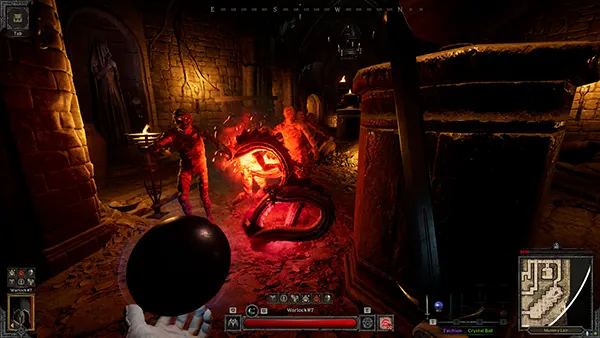
Technical Progress in Mobile Gaming by 2026
Mobile devices in 2026 are capable of running complex 3D environments with stable performance. Advanced chipsets, improved cooling solutions, and optimisation tools allow developers to deliver visuals and mechanics previously limited to desktop platforms. This makes a technically faithful adaptation of Dark and Darker more feasible than ever.
Cloud gaming integration also plays a role. Some mobile titles now offer hybrid solutions where processing is partially offloaded to remote servers. This can reduce hardware strain and enable more complex simulations, although it introduces dependency on stable internet connections.
Cross-platform play is increasingly common. A mobile version of Dark and Darker could potentially share servers with PC players, but this raises balance concerns. Differences in control precision must be addressed to ensure fair competition across platforms.
Future Outlook for Hardcore Mobile Titles
The success of complex games on mobile devices suggests a shift in player expectations. Users are no longer limited to casual experiences and are increasingly open to deeper, more demanding gameplay systems. This creates an opportunity for titles like Dark and Darker to expand their audience.
However, success depends on careful adaptation rather than direct porting. Games that attempt to replicate PC mechanics without modification often struggle, while those that redesign interactions for touchscreens achieve better results. The key lies in preserving the core identity while adjusting execution.
Dark and Darker Mobile has the potential to work effectively, provided that control systems, session structure, and user experience are tailored to mobile realities. The concept itself is viable, but its implementation will determine whether it feels like a natural extension of the original or a compromised version of it.
-
 Honor of Kings (Global Mobile): Best Starter Heroes and Basic Strategy
Honor of Kings remains one of the most widely played …
-
 Delta Force (2025) on Android / iOS — A New Standard of Mobile Shoo...
In 2025, mobile shooters continue to dominate app stores, with …
-
 Call of Duty: Mobile – The Ultimate Mobile Gaming Experience
Call of Duty: Mobile is a revolutionary entry in the …