
Monster Hunter Now: The Real Strengths and Weaknesses of AR Hunting in 2026
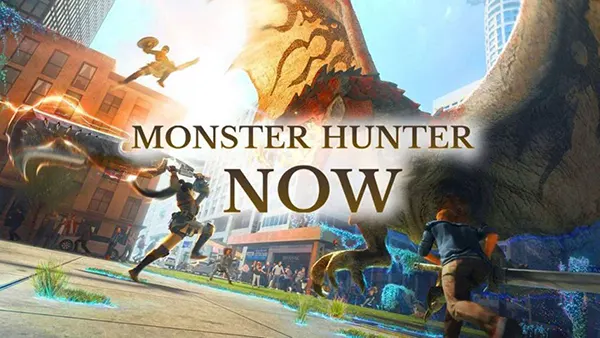
Monster Hunter Now, developed by Niantic in collaboration with Capcom, remains one of the most ambitious attempts to merge augmented reality with a long-running console franchise. By 2026, the game has evolved considerably since its 2023 launch, introducing new weapon types, balance patches, seasonal events and quality-of-life improvements. Yet the core question persists: does AR hunting genuinely enhance the Monster Hunter formula, or does it impose limitations that traditional entries never faced? This article examines the tangible strengths and weaknesses of Monster Hunter Now’s real-world hunting model, based on current mechanics, technical performance and community feedback as of 2026.
How AR Transforms the Core Monster Hunter Formula
Unlike mainline Monster Hunter titles, which rely on large, handcrafted maps and extended hunts, Monster Hunter Now condenses encounters into short, location-based battles designed for mobile sessions. Monsters spawn around the player’s real-world surroundings, using GPS mapping and biome rotation. Forest, desert and swamp biomes shift throughout the day, encouraging players to move physically rather than grind a static area. This structural change dramatically alters pacing, making each hunt typically last under 75 seconds.
The combat system has been simplified but not stripped down. Players still manage weapon classes such as Great Sword, Long Sword, Sword & Shield, Bow and Light Bowgun, each with distinct move sets adapted for touch controls. Dodging, special skills and elemental weaknesses remain central. However, the depth is compressed: there are fewer combo layers and no traditional trapping or environmental manipulation seen in console versions.
In 2026, Capcom and Niantic have refined monster behaviour and attack telegraphs to suit outdoor play. Hitboxes are clearer than at launch, and latency compensation has improved, reducing the frustrating “ghost hits” reported in early versions. Still, the mechanical complexity does not match titles like Monster Hunter World or Rise, and that trade-off defines much of the AR experience.
Accessibility Versus Mechanical Depth
One undeniable strength of Monster Hunter Now is accessibility. Hunts are short, controls are intuitive, and progression systems are streamlined. For newcomers, this removes the steep learning curve traditionally associated with the series. There is no need to memorise intricate crafting trees or spend 30 minutes tracking a single Rathalos across a sprawling map.
However, veterans often note the loss of layered strategy. There are no Palicoes to command in complex ways, no mounting mechanics with the same tactical nuance, and no intricate preparation phase involving consumables and traps. While armour sets still grant skills and elemental bonuses, build diversity remains narrower compared to console entries.
The result is a more immediate but less intricate hunting loop. It suits mobile gaming habits in 2026, where sessions are brief and attention is fragmented, yet it inevitably sacrifices some of the franchise’s hallmark depth.
Technical Performance and Real-World Integration
Monster Hunter Now relies heavily on geolocation accuracy, stable internet connectivity and battery efficiency. Since 2024, optimisation updates have significantly reduced overheating and power drain on modern iOS and Android devices. On mid-range phones released in 2025–2026, the game runs at a stable 60 FPS in non-AR mode, while full AR mode remains more demanding.
The AR camera mode allows monsters to appear within the player’s real environment, scaling dynamically based on surface detection. While visually impressive in controlled conditions, many players disable full AR during combat due to stability concerns and glare outdoors. As of 2026, most high-level hunters prefer standard combat mode with AR backgrounds turned off for precision.
Server stability has improved compared to launch. Regional matchmaking for Hunt-a-thons and Elder Dragon events is more consistent, and large-scale community events run with fewer interruptions. Nevertheless, rural players still face spawn scarcity compared to those in urban areas, highlighting an ongoing imbalance in location-based design.
Safety, Mobility and Environmental Limitations
Real-world integration introduces practical concerns. Monster Hunter Now encourages walking to spawn new monsters and gather resources, but this raises safety questions. The game includes movement speed restrictions and warning prompts, yet distracted play remains a real-world risk, especially in dense urban environments.
Weather conditions also affect usability. Bright sunlight can make AR visuals difficult to see, while rain and cold temperatures limit outdoor play sessions. Unlike console titles playable indoors at any time, Monster Hunter Now’s design is inherently dependent on physical context.
On the positive side, the walking-based structure aligns well with health-conscious gaming trends in 2026. Step-based progression, daily quests and limited-time events encourage moderate physical activity. For some players, this hybrid of gaming and light exercise is a genuine advantage over sedentary alternatives.
Content Updates, Monetisation and Long-Term Engagement
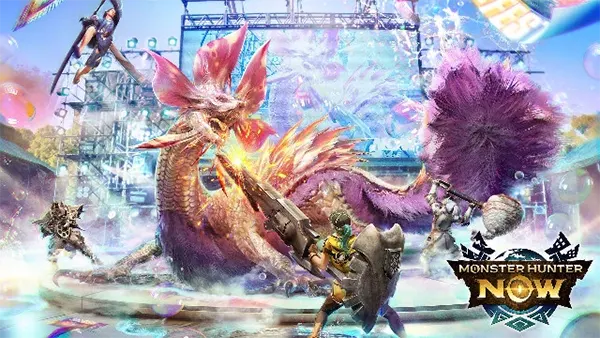
Since its release, Monster Hunter Now has expanded its roster steadily. By 2026, the game includes numerous flagship monsters from multiple generations, including Zinogre, Nargacuga, Teostra and Kushala Daora. Seasonal updates introduce event-exclusive variants and limited-time materials, maintaining rotation-based engagement.
Weapon progression remains grind-oriented but manageable within short sessions. Crafting requires repeated hunts for specific materials, and high-rank gear demands consistent participation in events. Unlike console entries, there is no single-purchase expansion model; instead, updates arrive incrementally throughout the year.
Monetisation revolves around paintballs, potion refills and inventory expansion. While the game is technically free-to-play, resource limitations can slow progression for non-paying players. However, as of 2026, balance adjustments have reduced the earlier perception that spending is necessary for competitive viability.
Community, Events and Social Play
Group hunting is central to Monster Hunter Now’s long-term appeal. Hunt-a-thons and Elder Dragon intercepts encourage cooperative play, and proximity-based matchmaking makes spontaneous collaboration possible in populated areas. In major cities, community meet-ups remain common during global events.
However, the social experience is uneven geographically. Players in smaller towns may struggle to find nearby teammates, limiting access to higher-tier monsters that scale for multiple hunters. While remote join features exist for certain events, they are not universally available.
Despite these constraints, the game’s live-event cadence keeps the ecosystem active. Rotating biomes, weekly challenges and collaborative milestones give players recurring objectives. For those willing to integrate gaming into daily movement routines, Monster Hunter Now offers a distinctive, if imperfect, reinterpretation of the hunting formula.
-
 Honor of Kings (Global Mobile): Best Starter Heroes and Basic Strategy
Honor of Kings remains one of the most widely played …
-
 Delta Force (2025) on Android / iOS — A New Standard of Mobile Shoo...
In 2025, mobile shooters continue to dominate app stores, with …
-
 Call of Duty: Mobile – The Ultimate Mobile Gaming Experience
Call of Duty: Mobile is a revolutionary entry in the …