
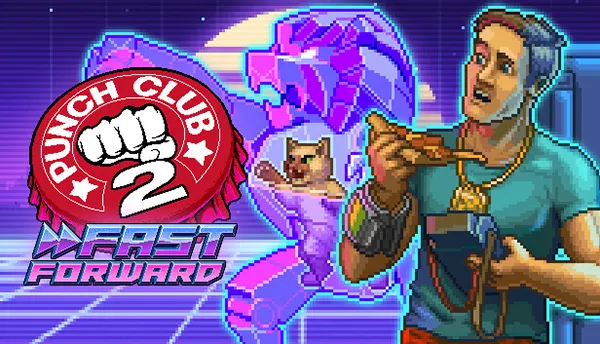
Punch Club 2: Fast Forward — Fighter Management and Storytelling in a Cyberpunk World
Punch Club 2: Fast Forward is a narrative-driven management game that combines tactical fighter development with a dystopian cyberpunk storyline. Released as a sequel to the original Punch Club, the game expands its core mechanics by introducing deeper planning systems, more complex character progression, and a futuristic setting that directly affects gameplay decisions. The player is placed in control of an aspiring fighter whose success depends not only on combat skills, but also on discipline, time management, and strategic choices made outside the ring.
Core Fighter Management Systems
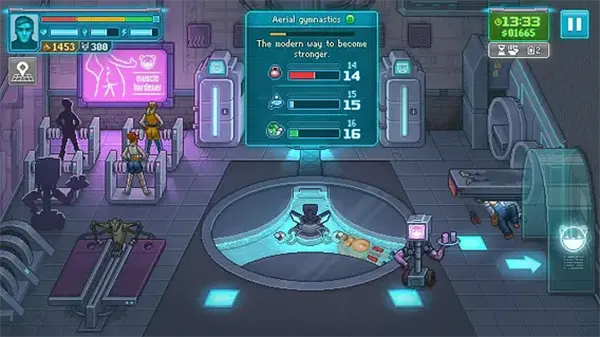
The foundation of Punch Club 2 is built around detailed fighter management, where every decision has long-term consequences. Training sessions, daily routines, and recovery periods are interconnected systems that require careful balance. Overtraining can lead to fatigue and injuries, while poor scheduling slows progression and limits competitive potential. This structure forces players to think beyond short-term gains and plan development cycles realistically.
Character attributes are divided into physical strength, agility, stamina, and combat intelligence, each influenced by specific activities. Training gyms, home workouts, and special facilities provide different efficiency levels depending on the chosen build. Unlike arcade-style fighting games, progress here is gradual, reinforcing the management aspect rather than reflex-based gameplay.
Nutrition and rest play a critical role in maintaining performance. Food choices directly impact energy regeneration and stat growth, while sleep patterns affect daily efficiency. These mechanics mirror real-world athlete management, reinforcing the game’s focus on realism within its fictional setting.
Strategic Progression and Skill Trees
Punch Club 2 introduces expanded skill trees that allow players to specialise fighters into distinct archetypes. Defensive builds prioritise endurance and counterattacks, while aggressive styles focus on burst damage and pressure. Each branch unlocks passive bonuses and combat abilities that alter fight dynamics.
Skill selection is irreversible in many cases, increasing the importance of long-term planning. Poor synergy between skills can limit effectiveness in higher-tier leagues, making early decisions particularly impactful. This system rewards players who understand mechanics deeply rather than those relying on experimentation alone.
Progression pacing is intentionally measured. Advancement feels earned through consistency rather than grinding, reinforcing the managerial identity of the game. This approach aligns with players who value strategic depth over rapid power escalation.
Cyberpunk Narrative and World Design
The cyberpunk setting of Punch Club 2 is not a visual layer but an integral part of the narrative and mechanics. The story unfolds in a society dominated by corporations, automation, and social inequality, influencing character motivations and available choices. Dialogue and events reflect these themes, grounding gameplay in a coherent world.
Story progression is tied to player actions rather than linear cutscenes. Career choices, alliances, and moral decisions affect how the narrative develops. This structure increases replay value, as alternative paths reveal different aspects of the world and its power structures.
Environmental storytelling is achieved through locations such as underground gyms, corporate districts, and residential zones. Each area provides contextual clues about the state of society and the pressures faced by its inhabitants.
Player Choice and Consequence
Decisions made outside the ring often carry as much weight as fight outcomes. Choosing between legitimate tournaments and underground leagues affects reputation, income stability, and story direction. These options are rarely framed as purely positive or negative.
Moral ambiguity is a defining feature of the narrative. Aligning with powerful entities may accelerate progress but compromise independence, while resisting systemic control introduces financial and physical risks. The game avoids simplistic storytelling, instead presenting trade-offs that feel grounded.
Consequences are persistent and rarely reversible. This design reinforces accountability and encourages players to reflect on their priorities, making each playthrough feel distinct.
Combat Preparation and Match Execution
Fights in Punch Club 2 are resolved through preparation rather than direct control. Players analyse opponents, adjust tactics, and select strategies before entering the ring. During matches, outcomes are determined by statistics, stamina management, and chosen tactics.
Opponent analysis becomes increasingly important as difficulty scales. Fighters exhibit unique patterns, resistances, and weaknesses, requiring tailored approaches. Ignoring preparation often leads to predictable defeats, regardless of raw stats.
The absence of manual combat input shifts focus entirely to planning and foresight. This reinforces the managerial theme and differentiates the game from traditional fighting titles.
Long-Term Career Sustainability
Career longevity depends on injury prevention and financial planning. Medical expenses, equipment upgrades, and travel costs accumulate over time, requiring careful budgeting. Success is defined by sustainability rather than short-term dominance.
Late-game content introduces heightened pressure, where mistakes are more costly and recovery options limited. At this stage, earlier decisions around skills, alliances, and resource management fully reveal their impact.
Punch Club 2 concludes not with a single definitive ending, but with outcomes shaped by accumulated choices. This reinforces its identity as a management-driven experience where strategy and discipline determine success.
-
 Honor of Kings (Global Mobile): Best Starter Heroes and Basic Strategy
Honor of Kings remains one of the most widely played …
-
 Delta Force (2025) on Android / iOS — A New Standard of Mobile Shoo...
In 2025, mobile shooters continue to dominate app stores, with …
-
 Call of Duty: Mobile – The Ultimate Mobile Gaming Experience
Call of Duty: Mobile is a revolutionary entry in the …