

Once Human Mobile — Review of the Open-World Survival RPG on Android and iOS
Once Human Mobile is one of the most discussed survival RPG releases expected on mobile devices, combining open-world exploration, crafting systems, and a post-apocalyptic setting shaped by supernatural elements. Developed by NetEase, the game aims to bring a large-scale multiplayer survival experience to Android and iOS, with mechanics typically seen on PC. This review examines its gameplay systems, technical features, and what players can realistically expect in 2026.
Core Gameplay and Survival Mechanics
Once Human Mobile builds its gameplay around survival fundamentals: gathering resources, crafting equipment, and maintaining character condition. Players must manage hunger, health, and environmental threats while exploring a vast map filled with anomalies and hostile creatures. Unlike many mobile survival titles, the game emphasises long-term progression rather than short session loops.
The crafting system is detailed and requires players to collect materials from different regions. Weapons, tools, and shelter elements are not just cosmetic but directly affect survival efficiency. Crafting chains can become complex, encouraging exploration and cooperation with other players.
Combat blends ranged and melee mechanics, with firearms playing a significant role. Enemies vary from mutated wildlife to humanoid factions, each requiring different tactics. The AI behaviour is more advanced than typical mobile standards, which adds tension during encounters.
Open World Design and Exploration
The game features a persistent open world with diverse biomes, including abandoned cities, forests, and contaminated zones. Each area offers unique resources and environmental hazards, pushing players to adapt their strategy constantly.
Dynamic events are integrated into the world, such as anomaly outbreaks or faction conflicts. These events can change resource availability or introduce temporary dangers, encouraging players to stay active and responsive.
Exploration is rewarded not only with loot but also with narrative elements. Environmental storytelling plays a role, with locations revealing fragments of the world’s backstory without relying heavily on cutscenes.
Multiplayer Systems and Social Interaction
Once Human Mobile is designed as a shared-world experience where players can interact, cooperate, or compete. The multiplayer aspect is not optional but central to progression, especially in later stages of the game.
Players can form groups or settlements, allowing them to share resources and defend territory together. Base-building becomes more strategic in multiplayer, as coordinated defence is required against both AI threats and potential PvP encounters.
Trading systems enable resource exchange between players, which helps balance progression. Instead of grinding every material individually, players can specialise and contribute to a broader in-game economy.
Base Building and Territory Control
Base construction is modular, giving players flexibility in design. Structures are not purely decorative; they influence defence, storage capacity, and crafting efficiency. Placement and layout can determine how well a base withstands attacks.
Territory control introduces competitive elements, especially in shared zones. Groups may compete for valuable locations rich in resources, leading to conflicts that require coordination and strategy.
Defensive mechanics include traps, automated systems, and cooperative guarding. This adds depth to gameplay, making base management as important as exploration.
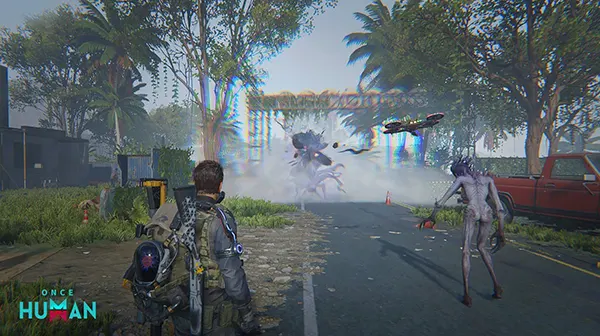
Technical Performance and Mobile Optimisation
Bringing a large-scale survival RPG to mobile devices requires careful optimisation. Once Human Mobile uses a scalable graphics system, allowing it to run on a wide range of smartphones while maintaining visual quality on high-end devices.
The interface is adapted for touch controls, with customisable layouts and support for external controllers. This flexibility is important for players who prefer different playstyles, especially in combat-heavy scenarios.
Network stability is a key focus due to the multiplayer nature of the game. Developers have implemented server optimisation techniques to reduce latency and ensure smoother interactions in shared environments.
Graphics, Updates, and Long-Term Support
Visually, the game stands out with detailed environments and atmospheric effects. Lighting, weather systems, and environmental decay contribute to a consistent post-apocalyptic tone.
Regular updates are expected as part of the live-service model. These may include new regions, enemies, and gameplay systems, ensuring the game evolves over time rather than remaining static.
Support for both Android and iOS devices is planned with parity in features. Cross-platform interaction is also expected, allowing players on different devices to share the same world seamlessly.
-
 Honor of Kings (Global Mobile): Best Starter Heroes and Basic Strategy
Honor of Kings remains one of the most widely played …
-
 Delta Force (2025) on Android / iOS — A New Standard of Mobile Shoo...
In 2025, mobile shooters continue to dominate app stores, with …
-
 Call of Duty: Mobile – The Ultimate Mobile Gaming Experience
Call of Duty: Mobile is a revolutionary entry in the …