
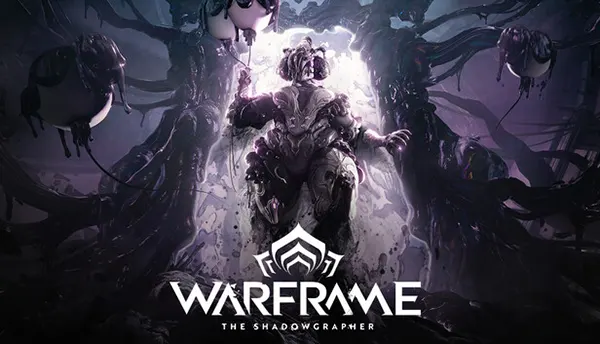
Warframe Mobile: Has Speed and Vertical Movement Survived the Transition?
Warframe has always stood apart from other action titles through its relentless pace, fluid traversal, and emphasis on vertical movement. Translating that experience to mobile devices was never going to be a simple technical exercise. By 2026, the mobile version has reached a stage where it is not just a companion build but a fully playable experience. The key question, however, is whether its signature movement system remains intact without compromising control and responsiveness.
Core Movement Mechanics on Mobile Devices
The defining feature of Warframe’s gameplay lies in its parkour system, which combines bullet jumps, wall latching, double jumps, and slides into a seamless flow. On desktop and console, this works because of precise input devices. On mobile, developers have had to rethink how players initiate these actions using touchscreens without overcrowding the interface.
The current implementation relies on gesture-based inputs combined with customisable virtual buttons. For example, a swipe combined with a tap can trigger a bullet jump, while holding a directional input allows for wall-running. This layered input system reduces clutter on the screen while preserving the complexity of movement options. Importantly, it allows experienced players to chain actions in a similar way to traditional platforms.
Latency and input delay were early concerns during testing phases, but optimisation improvements have reduced these issues significantly. Devices released after 2024 handle Warframe Mobile with stable frame rates, which is essential for maintaining timing-based movement mechanics. The result is a system that feels responsive enough for fast traversal, even if it still requires adaptation for players unfamiliar with touch controls.
Adapting Control Schemes Without Losing Precision
One of the biggest challenges has been preserving precision in a control environment that lacks physical feedback. To address this, developers introduced adjustable sensitivity curves and optional aim-assist settings that extend beyond shooting mechanics and influence movement direction as well.
Custom layouts play a central role here. Players can reposition and resize buttons, effectively tailoring the interface to their hand size and play style. This flexibility is not a cosmetic feature; it directly impacts how fluidly a player can execute complex movement chains, particularly in high-speed missions.
Another notable addition is the integration of controller support, which bridges the gap between mobile and console experiences. While not every player uses external controllers, those who do gain a level of control precision nearly identical to traditional platforms, reinforcing the idea that Warframe Mobile is designed as a full-scale version rather than a simplified adaptation.
Verticality and Level Design Integrity
Warframe’s maps are built around vertical exploration, with multiple layers, hidden routes, and elevated combat spaces. Preserving this design on mobile devices required careful consideration of camera control and player orientation, especially during rapid movement.
The mobile version maintains the same level geometry as its PC counterpart, which means vertical pathways and complex environments remain unchanged. This decision ensures gameplay consistency but places greater demand on camera handling. To support this, developers refined auto-centering mechanics and added subtle camera assists during parkour sequences.
These adjustments help prevent disorientation during fast movement. For instance, when performing a bullet jump followed by a wall latch, the camera subtly aligns with the surface, reducing the likelihood of losing spatial awareness. While some players prefer to disable these assists, they are crucial for accessibility on smaller screens.
Camera Behaviour and Spatial Awareness
Camera control is often overlooked in discussions about movement, yet it is essential for vertical gameplay. On mobile, managing both character movement and camera direction simultaneously can be challenging. Warframe Mobile addresses this with a dual-zone touch system that separates movement input from camera control.
Additionally, dynamic zoom adjustments occur during high-speed actions. When a player performs a slide or aerial manoeuvre, the field of view slightly widens, providing better visibility of the surroundings. This feature mirrors similar techniques used in console versions but is more noticeable on mobile due to screen size limitations.
Another improvement is contextual camera smoothing. During abrupt directional changes, the camera transitions more gradually, preventing sudden shifts that could disrupt gameplay. This contributes to a more stable visual experience, especially during extended parkour sequences across vertical environments.
Performance, Optimisation, and Real-World Gameplay
Beyond control and design, performance plays a decisive role in whether Warframe Mobile can sustain its signature speed. High frame rates are essential not only for visual clarity but also for maintaining the timing required for chaining movement actions.
By 2026, optimisation efforts have focused on scalable graphics settings and efficient resource management. Players can adjust texture quality, lighting, and effects to match their device capabilities. This ensures that even mid-range smartphones can deliver consistent performance without sacrificing core gameplay elements.
Network stability is another critical factor. Warframe’s cooperative missions depend on low-latency connections, and the mobile version incorporates improved matchmaking servers and predictive networking techniques. These systems help maintain smooth gameplay even in less stable network conditions, reducing interruptions during fast-paced missions.
Does the Experience Hold Up in Practice?
In real gameplay scenarios, Warframe Mobile demonstrates that high-speed movement can be preserved, though not without minor compromises. Touch controls require a period of adjustment, particularly for players accustomed to keyboard or controller inputs. However, once mastered, the system supports most advanced movement techniques.
The inclusion of cross-save functionality also strengthens the experience. Players can switch between platforms without losing progress, making mobile sessions a practical extension of the main game rather than a separate experience. This continuity reinforces the importance of maintaining gameplay fidelity across devices.
Overall, Warframe Mobile succeeds in retaining the essence of its movement system. While certain nuances differ due to the nature of touch controls, the core identity—speed, verticality, and fluid traversal—remains recognisable and functional. This achievement highlights how complex action systems can be adapted for mobile without being reduced to simplified mechanics.
-
 Honor of Kings (Global Mobile): Best Starter Heroes and Basic Strategy
Honor of Kings remains one of the most widely played …
-
 Delta Force (2025) on Android / iOS — A New Standard of Mobile Shoo...
In 2025, mobile shooters continue to dominate app stores, with …
-
 Call of Duty: Mobile – The Ultimate Mobile Gaming Experience
Call of Duty: Mobile is a revolutionary entry in the …