
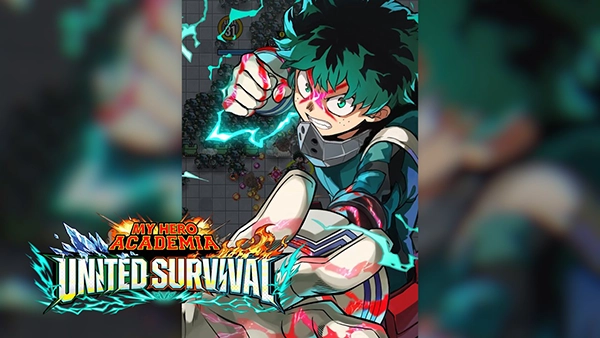
My Hero Academia United Survival: How the Survivors-like Format Works with Three-Hero Teams
My Hero Academia UNITED SURVIVAL takes the familiar horde-survival formula and changes one of its most recognisable rules: instead of building an entire run around a single fighter, players assemble a squad of three characters. Released worldwide on 6 August 2026, excluding Mainland China, KLab’s free-to-play action roguelite uses the Quirks of heroes and villains from My Hero Academia as the foundation for its combat. The result still has the constant movement, growing enemy crowds and run-specific upgrades associated with Survivors-like games, but the presence of three characters changes how damage, support abilities and ultimate attacks fit together. Rather than simply making one hero increasingly powerful, much of the appeal comes from finding a trio whose abilities complement one another while adapting that squad to the upgrades offered during each battle.
How United Survival Changes the Traditional Survivors-like Formula
The basic structure remains easy to recognise. A stage places the player against repeated groups of enemies, and defeating them gradually provides the resources needed to strengthen the squad during the current run. As characters improve, attacks become better suited to handling increasingly crowded encounters. The player therefore moves through the familiar Survivors-like rhythm of fighting, gaining power and preparing for tougher waves, without having to manage the dense set of commands associated with a conventional action RPG. UNITED SURVIVAL describes itself as a hero-action roguelite, and that description accurately reflects how the game combines straightforward real-time action with upgrade choices that can change the direction of individual runs.
Where the format becomes more distinctive is in its use of My Hero Academia’s Quirks. The series already contains abilities that naturally suit horde combat: some characters fire projectiles, others control space around them, while close-range fighters can clear enemies that approach the squad. Those differences give the game a practical reason to place several characters together rather than treating the roster merely as alternative versions of the same combat role. A squad can therefore cover weaknesses that would be far more noticeable in a Survivors-like built around one active character.
The roguelite structure also means that choosing a strong team before entering a stage does not settle the entire run. Upgrades received while playing still determine how effectively that team develops. A useful ability early in a battle may influence later choices because improving an existing attack can sometimes be more valuable than spreading upgrades across several unrelated options. This creates two interconnected forms of team building: the persistent squad selected outside a stage and the temporary build developed after the stage has begun.
Why Three Characters Make Each Run More Flexible
The squad consists of three characters, but the game does not require the player to control three separate fighters simultaneously in the manner of a traditional party RPG. One hero takes the central role while the other members contribute their own attacks and abilities. This keeps movement and combat readable on a smartphone screen while still allowing several Quirks to influence the battlefield at once. It is an important compromise: adding more characters increases tactical variety, but asking players to micromanage each one would work against the accessible nature of the Survivors-like genre.
That arrangement makes squad composition important before a run even starts. A character whose attacks perform well against concentrated groups may pair effectively with another whose Quirk reaches distant targets or provides stronger damage against tougher opponents. Players are consequently encouraged to think about what a team can do collectively rather than selecting three favourite characters without considering how their attacks overlap. As new enemies arrive from several directions, a balanced combination can reduce situations in which the main character has no suitable response to a particular type of pressure.
It also makes failed runs more informative. Losing a stage does not necessarily mean that the squad simply needs higher statistics. The problem may be poor coverage, an upgrade path that strengthened the wrong attacks, or a team whose abilities compete for the same role. Changing one member can noticeably alter the next attempt without forcing the player to abandon the entire group. This is one of the clearest ways UNITED SURVIVAL adapts the genre: the replay loop is based not only on trying a different selection of upgrades, but also on experimenting with a different relationship between three characters.
Quirk Combinations Turn Squad Building into a Core Mechanic
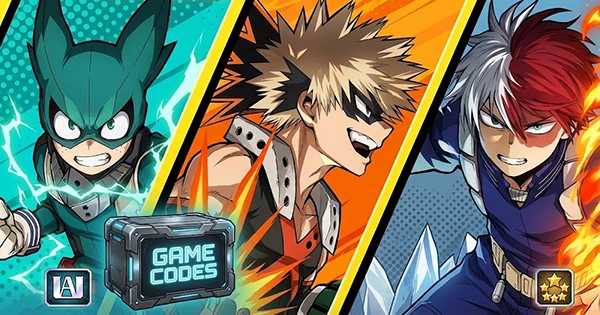
My Hero Academia gives the developers an unusually broad range of powers to translate into a horde-survival game. Izuku Midoriya, Katsuki Bakugo, Shoto Todoroki and other familiar characters are defined by abilities that behave differently in the anime, and UNITED SURVIVAL preserves that distinction by giving characters individual combat functions. This matters because the Survivors-like formula depends heavily on attack coverage. Damage concentrated in one direction feels very different from a wide-area effect, a ranged attack or an ability designed to control the space immediately around the character.
Three-person squads allow those differences to overlap. A close-range hero does not have to solve every problem alone if another squad member can reach enemies farther away. Likewise, strong area attacks become more useful when another character can help deal with enemies that survive the initial damage. Building around complementary Quirks therefore gives players a reason to consider range, attack patterns and battlefield control together. The strongest choice in isolation is not automatically the most useful addition to every three-person team.
This system also suits the identity of My Hero Academia particularly well. Teamwork is a recurring part of the source material, and UNITED SURVIVAL translates it into something the player can see directly during combat rather than limiting character relationships to story scenes. KLab specifically built combined attacks into the game’s design, allowing Quirks to contribute to powerful combo moves. The mechanic gives the third squad slot genuine importance: adding another character does not merely provide another source of passive damage, but expands the set of interactions available during a run.
Combined Ultimate Attacks Give the Trio a Shared Purpose
Ultimate moves are where the three-character idea becomes most visible. Rather than presenting each hero as an entirely independent combat unit, the game allows Quirks to be combined for larger attacks. These moments provide a burst of power when ordinary abilities are no longer clearing enemies quickly enough, but they also reinforce the idea that the squad is the basic combat unit. The visual spectacle is recognisably My Hero Academia, yet the mechanic has a practical function within stages because a well-timed combined attack can create breathing room during a dense wave.
Timing matters because powerful attacks are most valuable when the battlefield actually demands them. Using an ultimate simply because it has become available can leave the squad without the same option when a dangerous group or tougher enemy appears moments later. The game therefore introduces a simple layer of resource judgement without turning combat into complicated ability management. Players still spend most of their time moving through enemies and developing their build, but the strongest actions benefit from being held for the right situation.
The interaction between ordinary Quirks and ultimate moves also helps prevent the three-person system from feeling like three separate character builds sharing one screen. Regular attacks gradually shape the flow of the encounter, while a combined move represents the squad working as a whole. That distinction gives team composition a clear purpose throughout a stage. Players are not only asking which hero produces the highest individual damage, but whether three sets of attacks create enough coverage and whether their combined offensive tools suit the challenges expected later in the run.
Progression Extends Team Building Beyond a Single Run
Like many modern mobile roguelites, UNITED SURVIVAL does not reset every aspect of progression when a stage ends. Characters can be strengthened with experience and equipment obtained through play, while Collections based on scenes from the anime provide additional ways to improve abilities. These persistent systems sit alongside the temporary upgrades selected during each run. As a result, two attempts at the same stage may differ both because the player makes different choices during battle and because the underlying squad has become stronger between attempts.
The distinction is important for understanding how the game differs from purer examples of the Survivors-like genre. A traditional run-based structure often places most of its emphasis on decisions made after entering the stage. UNITED SURVIVAL adds a longer progression layer in which developing characters, equipment and Collections affects future attempts. This gives players more reasons to use and improve different members of the roster, although it also means that long-term investment can influence performance alongside movement and upgrade decisions during a run.
The game has continued to expand since its August 2026 release. By September, the Android version had reached version 1.1.1, while updates had added further story content and activities such as Inter-Agency Battles. KLab also reported more than one million worldwide downloads within the first week after launch. For the three-hero system, continuing additions are particularly significant because every new character can potentially create new squad combinations rather than serving only as another individual fighter.
Why the Format Fits My Hero Academia
The adaptation works because the source material already supplies the variety a Survivors-like needs. Quirks can become projectiles, area attacks, close-range strikes, movement tools and large finishing moves without requiring an artificial combat system to make the characters feel different. Putting three of those abilities into one squad increases the number of combinations while keeping the basic controls approachable. The player can understand the immediate objective — survive the enemy waves and become stronger — while gradually learning which heroes work well together.
UNITED SURVIVAL also uses its licence for more than character appearances. Alongside material based on the anime, KLab includes game-original storylines and special moves created specifically for this title. That gives long-term progression a narrative role as well as a mechanical one, especially for players already familiar with the relationships between the characters. At the same time, knowledge of the anime is not required to understand the central gameplay loop, because range, attack coverage and upgrade choices remain visible through normal play.
The three-hero structure is therefore more than a cosmetic adjustment to the established Survivors-like template. It changes how players prepare for a stage, how they react to the upgrades offered during a run and how they evaluate characters after unlocking them. A single hero still determines much of the player’s immediate movement, but success increasingly depends on what the full trio can accomplish together. By combining straightforward horde combat with complementary Quirks, persistent character development and shared ultimate attacks, My Hero Academia UNITED SURVIVAL gives the familiar survival formula a team-based identity that reflects the series it is built around.
-
 Honor of Kings (Global Mobile): Best Starter Heroes and Basic Strategy
Honor of Kings remains one of the most widely played …
-
 Delta Force (2025) on Android / iOS — A New Standard of Mobile Shoo...
In 2025, mobile shooters continue to dominate app stores, with …
-
 Call of Duty: Mobile – The Ultimate Mobile Gaming Experience
Call of Duty: Mobile is a revolutionary entry in the …